FindRE
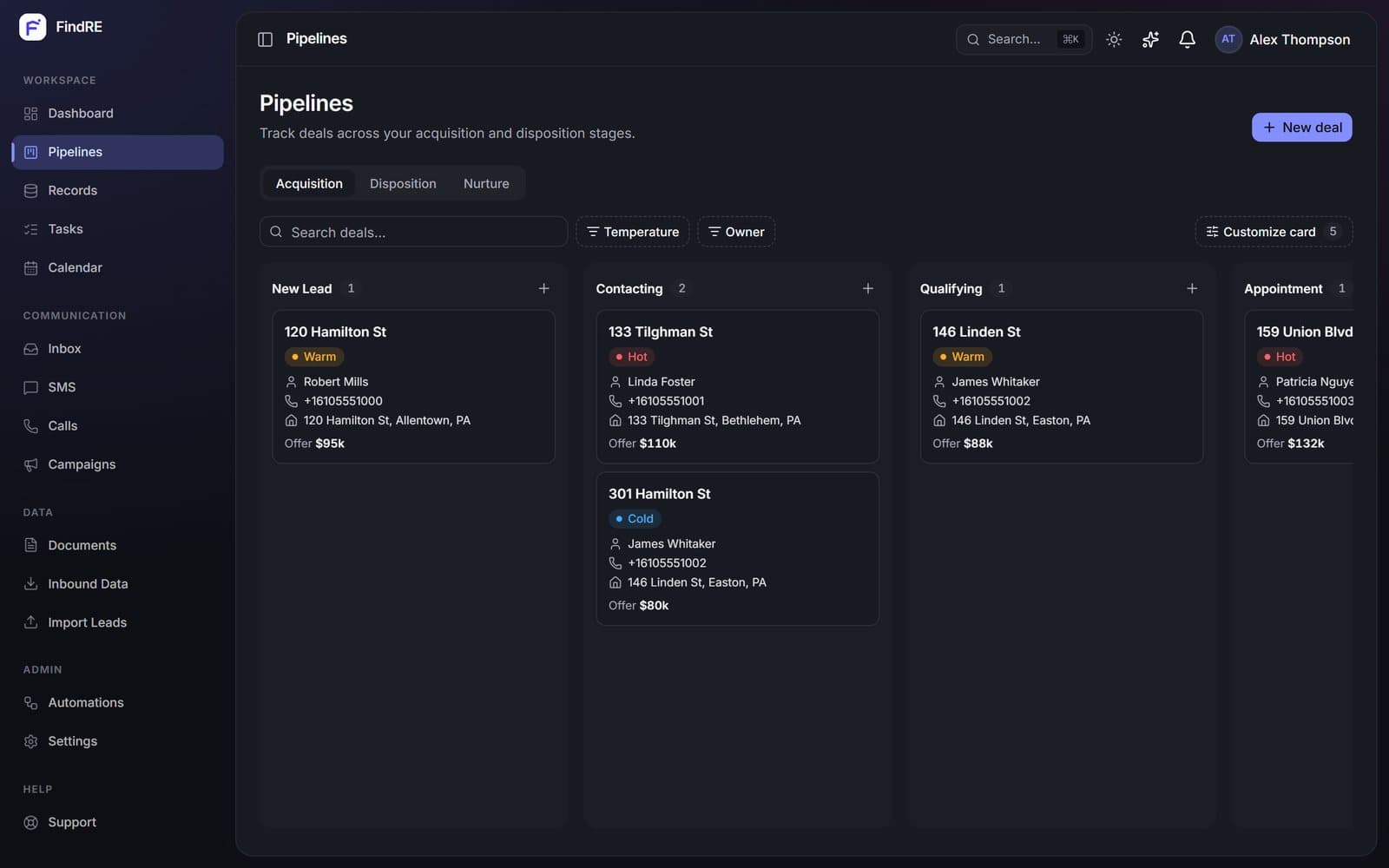
AI writes call summaries, suggests next steps and drafts replies inside a live CRM, and an MCP server lets AI assistants work the pipeline.
Abdur Rehman is an AI agent developer who builds custom agents that work inside your business: they read your CRM, database and APIs, take the actions you approve, and hand off to a person when judgment is needed. His AI work runs in production inside FindRE, a CRM for real-estate investors where AI writes call summaries, drafts replies and works the pipeline through an MCP server.
Last reviewed
One well-defined job, the tools it may use, and the things it must never do. Narrow agents are the ones that work.
Each action the agent can take is a small, permissioned tool on top of your CRM, database or APIs, with an MCP server where it fits.
Usage limits, cost tracking, logging of every action, and human approval before anything important changes.
It runs on your infrastructure with setup notes and a walkthrough, so your team can run, monitor and adjust it.
An AI agent can take over work that follows a pattern but still needs reading and writing: summarising a call and filing the next step, drafting a reply for a person to approve, sorting and enriching new leads, or answering a question by looking things up in your own systems.
The difference from a chatbot is action. An agent uses tools, which are small functions connected to your software, so it can update a record or schedule a follow-up instead of only describing what should happen.
By giving it less power than you think it needs. The agent only gets the tools you approve, every action is logged, spend is capped, and anything that matters waits for a person to confirm.
I test agents against your real examples before launch, because the hard cases in your data are where demos break.
Claude, OpenAI models, or several through OpenRouter. I choose per task based on quality, speed and cost, and build it so you can switch models later without a rewrite.
AI writes call summaries, suggests next steps and drafts replies inside a live CRM, and an MCP server lets AI assistants work the pipeline.
We define what the agent does, which tools it may use, what it must never do, and what a good result looks like.
I map each action to your APIs, choose the model, and plan permissions, limits and logging.
You get a staging link early. I run it against your own data and fix weak answers and edge cases.
It goes live on your accounts with limits and logs switched on, plus notes and a walkthrough.
Straight answers. If yours is not here, ask me.
 Ask me directlyI read and answer every message.
It can take actions such as updating records, creating tasks or drafting messages, through tools built on your APIs. It only gets the actions you approve.
The agent only gets the permissions you approve. API keys stay on the server, actions are logged, and I can add human approval before anything changes.
AI usage is billed by the model provider, based on how much the agent reads and writes. I add usage limits and cost tracking so you can see and cap your spend.
Pick one job it should do and the systems it needs to touch, then talk to someone who has shipped agents on real data. The first call with me is about the job, not the model. You leave with a written scope and a fixed quote.
After a short call I send a fixed quote for an agreed scope, so you know the cost before work starts. Larger builds are split into milestones.
Yes. The code lives in your repository and runs on your accounts. You own the code, the accounts and the data, so you are never locked in to me.
Guide5 min read
How real estate investors actually use AI: leads from public records, call summaries, reply drafts and follow-up rules, from the engineer who built FindRE.
Guide4 min read
When an AI chatbot is worth it, when a rented tool is enough, when a custom build pays off, and how to set one up so it answers from your own information.
Guide5 min read
A practical, first-hand guide to building an AI agent: define one job, design the tools, limit its power, test on real examples and control cost.
Summaries, drafting, voice-to-notes and document extraction, added to the product you already run.
Forms, CRM, accounting, email and AI connected, so routine work happens without anyone re-typing it.
Safe, permissioned tools that let Claude and other AI assistants work with your product’s data.
Tell me about it. I’ll tell you straight whether AI is the right answer.
You’ll talk to me directly.On the call and in every message.
Or email hello@abdurrehman.dev